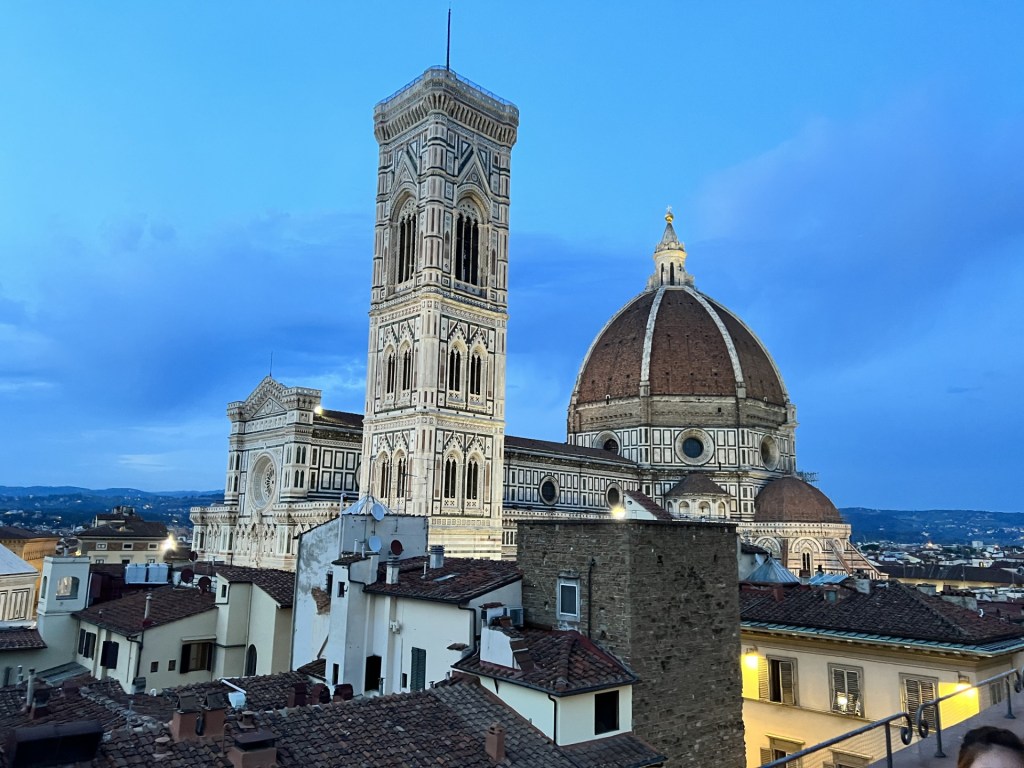
Quick Facts About Italy
- Official name: The Italian Republic
- Independence date: June 2, 1946 – the day when the monarchy was abolished and Italian Republic was established
- Member of the EU?: Yes
- Capital: Rome
- Currency: Euro
- Power Adapter: Type C or Type F
- Population: 58,000,000 (2024 est.)
- Yearly tourist visits: 68 million (2023 est.)
- How to get around: Trains – Italy has a fantastic train network. For some areas like the Dolomites, a car is probably preferred
- Best known for: Culture, wine, Tuscany, mountains, beaches, food (all of the above!)
A brief history of Italy
The first major civilization in Italy was the Etruscans, who flourished in central Italy around 800BC. After this point, their influence began to wane and eventually Etruria would be incorporated into Rome around 500BC. Etruscans still have a claim to fame, however, as the Italian word “Toscana” and the English word “Tuscany” both trace their roots to Etruria.
As Etruscan power declined, Rome began to rise. According to tradition, Rome was established by Romulus and Remus, descendants of a Trojan prince, in 753BC. A succession of kings eventually saw the establishment of the Roman Republic in 509BC, and gradually Rome established dominance over the entire Italian peninsula with a defeat of Greek colonies in 281BC. From this moment, Rome turned it’s attention to the entire Mediterranean. Rome fought a series of wars, the Punic Wars, against Carthage, culminating in a Roman victory which brought Hispania, North Africa, and Sicily under Roman control. At the same time, Rome defeated the remaining Hellenistic powers, consolidating all of the Mediterranean under Roman control. This time also brought a fusion of Greek and Roman cultures, known as the “Greco-Roman” culture, upon which most of modern European culture is derived from.
Rome then pushed further north into mainland Europe, but by 50BC the Republic was in disarray. In 49BC, Julius Caesar led an army across the Rubicon River, effectively invading Rome and bringing an end to the Republic. With this action, he essentially established the Roman Empire, though it would not be consolidated until Octavian was crowned Augustus Caesar in 27BC. During his reign and for 1 century after the Roman Empire was in it’s Golden Age, erecting and establishing many of the monuments which we associate with the Empire. Eventually the Empire began to show cracks, and it was separated into East and West in 395. The Western Roman Empire, with Rome at its center, would only last another eighty years until 476.
With the fall of the Roman Empire, Italy descended into the Middle Ages in disarray. After centuries of warfare and outside attacks, many powerful yet separate city-states like Venice, Florence, and Siena, arose and established regional control. It was from this framework in the late Middle Ages that the Renaissance began and spread in Italy, bringing a revival of arts, science, and culture that would spread throughout Europe. However, over the subsequent centuries Italy remained divided, despite several foreign invasions and other conflicts.
With Napoleon’s defeat, Italians began the long and arduous process of unification. In 1861, Italy officially became a nation-state under the leadership of King Victory Emmanuel II, though several northern regions of modern-day Italy would not be brought into the Kingdom of Italy until the end of World War I as spoils of war with Italy being on the Allied side. However, much of what Italy was promised during the war was not given to it, including Dalmatia and Albania along with any overseas German colonies. This led to uproar and disaffection with the government, and was one of the reasons for fascism’s rise with Mussolini. Using totalitarian tactics, Mussolini and his fascist party were able to seize control of Parliament in 1924, essentially establishing a dictatorship.
Once Hitler gained control of Germany, Mussolini drew Italy ever closer to the Nazi regime, culminating in the “Pact of Steel” between the two leaders. Italy also invaded Ethiopia in 1935, isolating it from the international community except for Germany, which supported the invasion. Reluctantly or not, this necessitated closer relations between Italy and Germany. With the outbreak of war, Mussolini tried to press Italian claims and expand territory, but his military was outmatched and inadequate at every turn, often needing German strength to have any military success. Mussolini would be ousted in 1944 during the Allied invasion, and though he would rally loyal troops to his cause, eventually would be captured and executed for high treason in 1945. With the end of World War II, the Italian Republic was established and Italy was gradually reincorporated back into the European community.

The 17 Most Underrated Cities in Europe