After exploring much of Europe we finally decided to make our way to Asia. First stop: Japan. Second: South Korea. Since we would be traveling to the literal other side of the world we decided to combine both countries into a single trip. We definitely focused on Japan, but we left a little time to see at least Seoul as well.
In Japan we visited the “Big Three” of Tokyo, Kyoto, and Osaka, but also spent a few magical days in Kawaguchiko in the Mt Fuji area. Nearly every first time itinerary in Japan will include at least those three cities, and for good reason! Usually people day trip to Mt Fuji from Tokyo, but we think it’s too amazing of an area to spend less than a day there. Plus, the more time you spend there the more likely you are to see Mt Fuji!
Japan and South Korea are definitely different, but they are each great in their own way. Their cultures are such a fantastic experience and we really recommend diving fully in and embracing every aspect of it. Before we get to the itinerary, here are a few quick tips:
- Pre-load Suica card on Apple Wallet – this will make subway and train travel much easier!
- 72 hour Tokyo and Kyoto Subway ticket – in the big cities, it’s worth it to buy a subway pass as you’ll likely use it quite often and it’s pretty cheap!
- Use Klook for subway, train, or other similar tickets
- Finding an ATM where you can withdraw cash in Japan is difficult, so definitely use 7/11! Your withdrawal will likely be declined at most other ATMs and some places you’ll need to use cash so you’ll need some on your trip!
- One thing to note is both countries give water for free with dinner unlike Europe.
- Make sure you hang on to your train tickets as you need the ticket to enter and exit after your ride as well.
- If you buy things tax free in Japan they put it in a bag with a red seal and then you cannot open it until after you leave the country. Tax free shopping for tourists is going away in 2026 though!
- Both countries use the same plug as North America.
Table of Contents
*Disclaimer: This post may contain affiliate links, which means we may receive a commission if you make a purchase/booking through a link at no extra cost to you. We hope this information helps you plan your next vacation.
Day 1 – Tokyo – Shinjuku
We were fortunate enough to have a direct flight from Washington DC to Tokyo, and we landed around 3pm. It took about an hour to go through customs and pick up our bag. We decided to taxi to the hotel rather than try to train with our luggage, though there was a shuttle bus as well. The drive took 50 minutes due to traffic and cost about $70.
In Tokyo we stayed at the Keio Plaza Hotel in Shinjuku for 4 nights. Breakfast was not included but could be purchased. The hotel is absolutely huge, with 47 floors and multiple towers. There was a really cool sky lounge overlooking Tokyo on the 47th floor. We absolutely loved the location, walking distance to the main sites in Shinjuku and very close to the train station!


Bellustar Tokyo in Shinjuku is another very highly rated hotel in a very good location. After check in we wandered around Shinjuku in search of Godzilla. We found him perched on top of the Toho building where he roars every hour on the hour from noon until 8pm. Along the way we also saw the Kabukicho District, a street with light up billboards on every building!


For dinner we went to Ichiran, a ramen chain that was absolutely worth the hype. Their pork ramen is delicious! Ichiran is a really cool concept where you order and pay at a machine, then you are given a ticket with everything you ordered and wait for seating areas to come available. While waiting you can see lights on a board which indicate if a spot is filled (red light) or empty (green light!). Once ready an employee will take you through a curtain to your seats!
We added the soft boiled egg to our ramen, and we only regret not adding another one. We were lucky and only had to wait for about 15 minutes around 6pm, but by the time we left a little before 7 the line had grown significantly! You absolutely must have this at least once on your trip to Japan. They are located in every major city so there will always be one relatively near by!


After dinner we explored around the Golden Gai Izakayas. We really enjoyed seeing all the tiny bars, though we did not go in any as we did not feel confident on how to handle the language barrier in such a small setting. We had heard stories of tourists being turned away, so we decided to admire from afar. We also explored around the Omoide Yokocho, a few streets with local restaurants and stalls in Shinjuku. The tight alleys make you feel like you are in old Japan!


One of the unique attractions in Shinjuku that we made sure to see was the giant cat on the ALTA building. At this point we wanted dessert so we went for cremia – essentially Japanese soft serve ice cream – so we went to Excelsior Cafe. The cremia has a cookie cone that was soft and delicious, but it melts fast so eat quickly!


Here are some additional food ideas in Tokyo:
- Menchirashi in Shibuya or Udon Shin in Shinjuku for Carbonara udon- may have long waits
- Suchi Eto in Ginza or Sushi Punch-19 course Omakase experience
- Oreryu Shio ramen- in Shibuya city- vending machine ramen
- Harajuku Gyozaro – right next door for steamed and pan fried dumplings
- Pizza studio tamaki
- Afuri for spicy yuzu ram in Harajuku
- Ginza Kagari for chicken paitan truffle ramen
- The Matcha Tokyo- right outside the Shinjuku station for matcha latte
- Zuichou for Katsudon in Shibuya
- Kikanbo for ramen
- Ebimaru Ramen- lobster ramen- north of the Imperial Palace- far from things
- Ginza Kagari Soba – ramen
- Sabanji- spicy beef noodle soup
- Wagyu Yakiniku Nikutarashi, Yoyogi
- Gyukatsu Motomura (Coredo Muromachi Branch)- beef on the skillet
- Uogashi Nihon-Ichi- standing sushi bar- right by Shinjuku station- try Aburi – flame torched
- Standing Sushi Nemuro Hanamaru
- Tsujita Ginza
- Umai Sushi Akasaka Tokyo- can make reservations
- Yellow Shibuya for Omurice
- Age 3 Ginza for deep fried cream toast
- Wagyu Ichinoya – wagyu steak set
- Ginza Sand- beef sandwiches
- A Happy Pancake for fluffy pancakes
- Strawberry matcha latte from Hatoya Asakusa
- Shaved ice from Fruit Vinefru
- Coco Nemaru in Ginza for mogami beef wagyu
Speakeasies:
- Benfiddich
- The SG Club
- Tir na nog
- Mixology Salon
- A10 in Shibuya
Souvenir shops/things to consider buying:
- Don Quijote(In Osaka too) for literally everything! Just going here is an experience
- Biore UV sunscreen
- Vitamin C serum
- Rice mask
- Fino hair mask
- Honey shampoo
- Kitkats in all kinds of unique flavors
- Engraved Chopsticks
- Tea pot set
Day 2 – Tsukiji, Ginza, and Walking Food Tour
In the morning we made our way to Tsukiji Outer Market for breakfast. Most of the shops in the market are open from 6am-2pm Open 6:00am-2:00pm, though much of it is closed on Sundays. We took the subway for about 15 minutes to get there. Make sure to have cash! We had to make a quick stop at 7/11 to withdraw cash so we decided to try their famous egg salad sandwich and it was delicious.
Our first stop in the market was at Sushi Zanmai Honten. We loved this place because it is inside and seated, and we needed to get out of the rain for a bit. They give you an Ipad to order each individual piece of sushi that you want. We were able to sit at the bar and watch them make it. The sushi was delicious and cheaper than the other standing outdoor stalls. Matt also got an iced green tea here that was really good.


After our sushi we walked over to Matcha Stand Maruni and each got an iced matcha latte. This was the best matcha latte we have ever had. It was so good that we literally went back for a second one before we left Tsukiji. You get to choose if you want it sweetened at all and how much, though we recommend not overdoing it at least on your first try!
After our refreshment we went on the hunt for the famous wagyu beef skewers that we found along the edge of the market. While we didn’t catch the name, the stand is almost impossible to miss. While the wagyu is price, it is delicious and so worth it. They had a deal for sake too, so naturally we had to try that as well.


We also tried some soy dipped rice balls that were not our favorite, though still worth the sample. Our last food stop was Strawberry Mania for a custard daifuku, essentially a strawberry on top of mochi filled with a custard. We also sampled their candied strawberry skewer. We would not recommend these as the outer sugar coating was so hard we literally thought we might break a tooth eating it. The strawberries themselves were delicious and the daifuku was so good!


We walked past the Tamagoyaki station in Tsukiji, but the line was so long we decided against it. Tamagoyaki is essentially hot sweet eggs on a skewer, and while we did not try them there we did try them later in the trip and they are extremely good.
Tsukiji is not just known for food. There are also some really neat souvenir shops scattered throughout the market featuring pottery and other really fun trinkets. We bought some origami swan chopstick holders from a cute pottery place that also had beautiful bowls, cups and tea pots. We were tempted to buy some of the pottery, but opted not to since it was so early in the trip.

One attraction we did not see in the area was Hamarikyu Gardens, an attractive outdoor garden right along Tokyo Bay featuring saltwater ponds and more. Unfortunately, the rain scared us away, but we recommend stopping by if you have time! It is very affordable at just 300 yen, which is roughly $2.
Instead, we took the subway over to Ginza to go to the Flagship Uniqlo store. It is massive with 12 floors but it was also very busy, especially because of the rainy day. Emily was bummed they didn’t have their sweaters out because it was summer time and she really wanted to shop their excellent collection. We did find some adorable graphic tees for our niece and nephew though!


After shopping, we walked over to Ginza Natsuno as they are known for their handmade chopsticks that you can also have engraved. We liked some but they were very expensive so we decided to wait and look somewhere else. We did get a few cute chopstick holders though!
For lunch we stopped at Tsujita Ginza– a pork ramen restaurant. This was another smaller restaurant (about 20 seats), and we ended up needing to wait about 30 minutes in the rain for seats to open up. When compared to Ichiran there were more noodles and more tender pork for the same price, but the broth had a much stronger flavor. While we preferred Ichiran, this was still a nice experience!


Here are a couple other restaurant ideas in Ginza:
- Ginza sand- open until 4am- 4 minute walk from Uniqlo
- Ginza Kagari Soba for soba noodles in rich chicken broth and chicken paitan truffle ramen
- Kaiten Sushi Ginza Onodera
After returning to Shinjuku we made our way to the meeting point for our Tokyo Bar Hopping Night Tour. The tour lasted around 3 hours and consisted of 4 local dishes at 3 different local Izakayas. To end the night we went to a sake bar on the top floor of a building overlooking Shinjuku. While we really enjoyed the tour, the one thing missing was a visit to one of the small izakayas in Golden Gai.


Once the tour finished we went to Don Quijote to grab some fun things to take home like flavored Kit Kats and skin care products. You can easily spend hours in this store exploring every floor, and there is certainly something for everyone here!
Day 3 – Meiji Shrine, Takashita, Shibuya, Asakusa
We got an early start and immediately made our way to Meiji Jingu Park and Shrine, which was in the general direction of Shibuya. We walked along a beautiful path lined with trees that took us back to the Shrine. We even saw a couple getting married there! It was a beautiful shrine that’s well worth the visit.
On the way out we popped into their cafe and souvenir shop, partly because it was air conditioned but mostly for some sustenance. We ordered cappuccino and iced green tea, egg salad sandwiches (this is going to be a theme throughout the trip) and a matcha gelato. In there store we purchased some beautiful chopsticks as well!


After exploring the shrine we walked across the street to Takeshita Street, a popular shopping area in between Shinjuku and Shibuya. We meandered down the street and went in nearly every shop along the way, stopping for banana gelato as well. Naturally we purchased a few more souvenirs along the way too!


We then walked 20 minutes from Takeshita Street to Shibuya. We wanted to get the omurice from Yellow Shibuya but the que was really long – over an hour wait! We saw that there were tons of restaurants in Shibuya that served omurice so we walked one street over to Craft Cheese Market Restaurant where there was no wait. We got there right when it opened at 11:30. We order the traditional omurice to share. It’s on the larger side but you could definitely have one per person if you were hungrier. Unsurprisingly it was super tasty!


Before leaving Shibuya we stopped at Jump Shop Shibuya to look for anime souvenirs, though it was a bit of a disappointment. We specifically were looking Luffy figurines, but for whatever reason despite One Piece being really popular we struggled mightily to find anything we liked.

We then quickly walked through Shibuya Crossing, famous for being the world’s busiest pedestrian crossing in which people walk every direction once the lights turn red. It is quite the spectacle! After passing through the crossing we hopped on the subway to go to Asakusa, about 35 minutes away.
Once we arrived in Asakusa we walked about 10 minutes to Kappabashi Street for shopping. Asakusa was alive with some sort of festival featuring traditional music, outfits, and more! It was very fun to walk through. On Kappabashi Street we were hoping to find a teapot set as the area is known for cookware, and while we did see a bunch of knives, ceramic bowls, and plates, it was mostly higher end items. If you are looking for an outstanding Japanese knife, this is the place to get it!
From Kappabashi Street we walked towards Senso-ji Temple and the markets surrounding it. Emily was really excited to try melon pan from Asakusa Kagetsudo, and it definitely did not disappoint! We had a short wait for our warm melon pa filled with whipped cream and it was totally worth it. They close at 5pm so just make sure you get there early enough!


We then made our way to Asakusa Sumo Club for our live sumo performance at 3pm. The Asakusa Sumo Club is made up of retired Sumo wrestlers, so while it is not a championship Sumo match, it is much more interactive and was a very fun experience! The venue is small and intimate, the food provided was delicious and all you can eat, and you get one free drink as well.
Tickets for the show cost a little over $100 and the show lasts about 2 hours. The show begins with a history of Sumo and the techniques the wrestlers use to train. Then there is a 3 round showdown between the Sumos, and 8 people then have the opportunity to “wrestle” them at the end. You even get to take a picture with them as well! This is a really great experience and a great option if you aren’t able to attend a championship match.


After the show we walked around the Senso-Ji Temple, the oldest temple in Tokyo and a very significant Buddhist site within Japan. We also explored the Nakamise-Dori markets around it. We saw the Kaminari-mon, aka the Thunder Gate, which is the main entrance into Senso-Ji. If you are so inclined, you can get your fortune told at the temple.


While we were only 2 days into the trip, we decided to take a break from Japanese food for dinner so instead we went to Savoy Pizza. This was a highly rated pizza shop with just about 12 seats that definitely did not disappoint! We ordered a salad and the margherita pizza, each of which was delicious. You can easily order a pizza per person, but we weren’t super hungry so we splitting was perfect.
At this point we were getting pretty tired so we took the subway back to our hotel and then went to the 45th floor for a drink with a view over the city. This was a very nice feature of our hotel that you should definitely take advantage of if you stay there too!
Here are some other food ideas in the Asakusa area:
- Beni Zuru- fluffy pancakes
- Chaya Tabanenoshi- matcha creme brulee crepe
- Imo Pippi for sweet potato creme brulee
- Asakusa Menchi- minced meat patties
- Wagyu Ichinoya Asakusa- wagyu steak set
Day 4 – Kamakura and Shibuya Sky
We started this day with a quick breakfast at the 7/11 right next to the hotel – seriously, make sure you try 7/11! We then made our way to the train station to catch the 8am JR train towards Kamakura. The train station is absolutely packed in the morning like nothing we’ve ever seen before! Make sure to arrive early and give yourself plenty of time to navigate the station and find the right track. We can’t recommend the Japan Transit app enough to help you plan your travel!
We arrived in Kamakura around 9am and were hoping to get a little bite to eat, but most of the shops don’t open until 9:30 or 10 at the earliest! In fact, the city was pretty quiet until late morning. Instead, we made our way to Verve Roasters for a coffee, tea, and a delicious pastrami avocado sandwich.


After we fueled up we continued straight up the street to Tsurugaoka Hachimangu, a nearly 1000 year old Shinto shrine dedicated to Emperor Ojin. The shrine is free to enter and walk around, and it is likely to be very popular as the day wears on. We recommend going early and exploring the very large complex!


From the shrine we walked 22 minutes to Hokokuji Temple, originally built more than 700 years ago on the edge of Kamakura. It wasn’t a bad walk and there is a designated walking path but a lot of people do decide to take an Uber or Taxi, especially in the summer heat. You can buy the ticket for entrance and the teahouse in the bamboo forest on site the day of, and it is very affordable. The temple is open for visits from 9am-4pm!
This was our favorite temple, perhaps of the entire trip but definitely in the Tokyo region. The absolute best part was walking through the small bamboo forest and arriving at Kyukouan, a cute little tea house in the middle of the forest. We ordered a fresh matcha tea served in a traditional bowl. This was such a cool experience, one of the most memorable of the trip, and definitely a MUST while in Kamakura. Bring cash for the tea!


Once we finished at Hokokuji Temple we walked the 22 minutes back to Komachi-dori Street, the main street in Kamakura. On our way back we passed Cafe Kazenomori, a restaurant that we cannot recommend enough! It has an absolutely beautiful view over a large pond that features a ton of lily pads.
The service was excellent as well and the food was so good! We tried the local Kamakuran specialty, Shirasu – white bait fish served over udon noodles. The meal came with oolong tea and a soft boiled egg, but we also had to order a dessert set that came with pancakes with a sweet red bean paste in the middle, matcha ice cream, and a matcha latte. We just really can’t recommend this restaurant enough when you’re in Kamakura!


We then shopped our way down Komachi-Dori Street as all the stores were open and quite busy by the early afternoon. Along the way we bought some chopsticks and coasters. We also tried some street food vendors and got the curry pan from Giraffa that was so so good! We also got a fried minced meat pattie that was delicious and had to get another strawberry daifuku from Strawberry Mania.


After shopping we hopped on the Enoshima local train for 2 stops over to the Great Buddha. At this point we did not want to walk the 25 minutes over to it! The Great Buddha is located at the Kotoku-in Temple. The Great Buddha is certainly a sight to behold weighing in at over 100 tons and more than 43 feet tall! Amazingly, the Great Buddha dates all the way back to 1243.
To get there, you walk about 7 minutes from the Hase train station to the Temple. We thought it was a really neat experience to see and the size was incredible. We paid to go inside the Buddha (just 50 yen), but we probably would recommend skipping it. It is very crowded, dark, and hot inside with pretty little to see. On your day trip to Kamakura it is absolutely worth venturing a bit outside the main town to see this wonder.


Our last stop of the day was Hasedera Temple, a really interesting site that features hundreds of small statues of the Jizo Bodhisattva that line the walkways up the hillside. The temple is just a 7 minute walk from the Great Buddha and is on the way back toward the train station. Near the top of the complex is a beautiful ocean viewpoint that offers great views of Kamakura and the ocean beyond. There is also a large beautiful coy fish pond and a shrine built into a cave system that you can walk through. Despite seeing many other temples throughout the day, this is unique and is definitely worth it!


Some other ideas of things to do in Kamakura:
- Zeniarai Benten Shrine
- Tokeiji Temple
- Kenchoji Temple
- Engakuji Temple
- Meigetsuin Temple aka the Hydrangea Temple
- Walk on the black beach of Shichirigahama or Yuigahama Beach
As you can see, Kamakura has no shortage of temples so definitely make sure you see at least a few of them! When we were finished exploring around Kamakura we trained 1 hour back to Tokyo.
Back in Tokyo we went to dinner at Uobei Shibuya Dogenzaka, a conveyor belt sushi restaurant with great ratings. We really enjoyed this experience as we got to try so many different things and it is very affordable. It was so cool to order the sushi and have it come directly to your seat via conveyer belt. They even have ramen, Udon, tempura, and dessert you can order too.


After dinner we popped into the Shibuya Mega Don Quijote which we liked more than the one in Shinjuku. It is enormous! We bought lots of different flavors of kit kats, some souvenir book marks, flower foam hand soap, and of course more skin care.
Our last event of the night was Shibuya Sky. Our ticket reservation was for 7:00pm and you have to be on the 14th floor for entry by this time. They will let you in 10 minutes prior to your reservation time. We really don’t recommend going around sunset as it is an absolute madhouse. You have to wait in such a long line after going up the elevators just to enter the rooftop. You also have to put ANY bags in a locker, though at least that is provided for free. You can see the Shibuya Crossing up there and the Tokyo Tower, which is cool but honestly we just didn’t have a great experience and think it is highly overrated.

One tip for visiting Shibuya Sky, if you do decide to go, is to go to the rooftop sky bar and buy one drink. This provides entry to the private area to get away from the masses to get really great pictures. We are glad we did this once but honestly we would not go to Shibuya Sky again, or at least not anytime near sunset.
Other things you could do in Tokyo that we did not get to:
- Tokyo Tower – see it from Tokyo Tower Times Parking. Get drinks at the Blue Room or the Jade Room – garden terrace in the Edition or Sky Lounge Stellar Garden for a great view
- Batting cage in Asakusa- Ohtani pitches to you
- Go to a baseball game at the Tokyo Dome
- Yushukan World War II Museum – interesting perspective on the War
- Gotokuji cat temple- Southwest of Shibuya
Day 5 – Kawaguchiko
We thought about trying our hotel breakfast before leaving, but it was $30 per person so we decided to sleep just a bit longer and get the delicious 7/11 egg salad sandwiches once again. We then made our way to the Shinjuku station for our 7:30 train to Kawaguchiko. Make sure to get there early to give yourself plenty of time to navigate the train station, and make sure to book your train tickets well in advance as they could sell out! If they do, you can also bus over but the times are a bit later and it takes a bit longer.
We had some people hop on the train about 1 hour into the ride that bought standing tickets and had to just stand in the center aisle for the last hour to get to Kawaguchiko. We arrived in Kawaguchiko after about 2 hours. The Kawaguchiko station has a gift shop and some souvenirs, including sweet bean cakes, Japanese strawberry sponge cake, and of course a matcha latte.
Food ideas for the Kawaguchiko area:
- Miyaki Udon in Fujiyoshida
- Hoto Amano
- Oishi Park Cafe- 24 minutes walk from our hotel or an 8 minute bike ride
- Try cheesecake and red bean buns at Cheesecake Garden
- Oshiruko at the Ryo from Kawaguchiko food truck
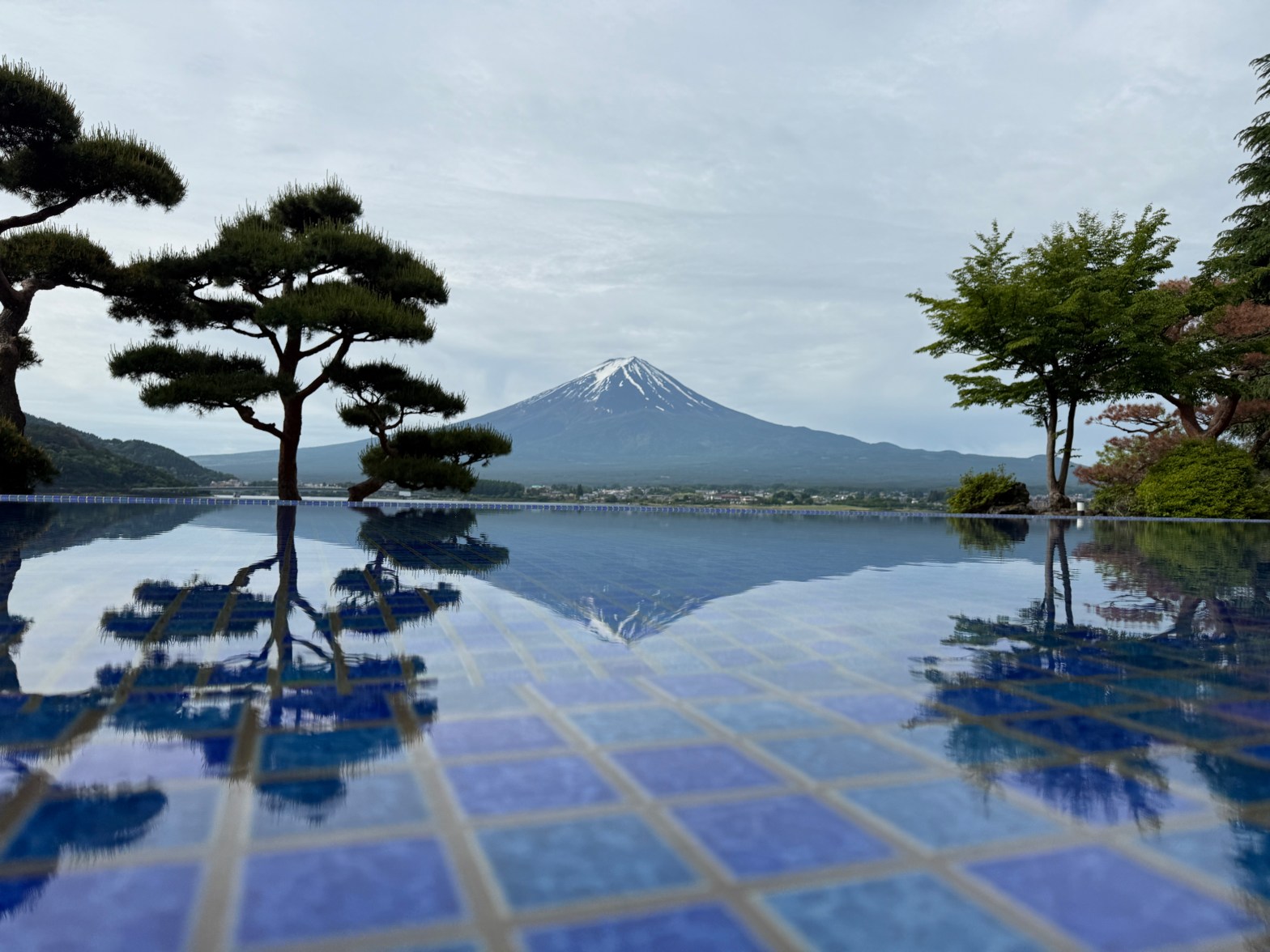
Once we arrived we grabbed a taxi that was waiting right outside of the station. It was only about $15 to get to drive the 15 minutes from the station to the hotel. We stayed at Shuhokaku Kogetsu, a ryokan with an unbelievable view of Lake Kawaguchi and Mount Fuji. The hotel includes breakfast and a kaiseki dinner each night, which was a truly incredible immersive experience.
The hotel itself, including the staff, was just outstanding. It truly is one of the best hotel experiences we’ve ever had. The staff wait outside for you to greet you upon arrival and departures. They take your bags for you and when you first arrive they prepare tea for you in your room, each of which has a view of Mount Fuji.

Something we did not realize initially is that because it is a traditional ryokan, the bed is put away on arrival and just a table and chairs are located on the ground in the center of the room. After your dinner in the evening they make your bed up for you each night. We did find the mattresses a bit thin and hard, but the experience was still quite lovely.
They hotel offers many different services you can choose from as well including a public onsen, private onsen available for rent, massages, and facials. They also have a free happy hour from 2:30-6:00 pm everyday with free water, tea, coffee, red and white wine. You can take your drink and sit inside their seating area with large windows or outside and enjoy a lovely foot bath with a view of Mount Fuji.

The Kaseki dinner is very good. Each day there are many different courses of things that honestly seem pretty random to us but are purposely selected and very good. There was one squid dish we didn’t like and one small whole fish we weren’t fans of only because it had a million little bones in it, but overall the experience each night was one of the coolest things we’ve ever done. They have drinks that you can order for additional charge as well.
By the time we got to our hotel it was a little before 10:00am and they held our bags for us. Just next door there is a (somewhat sketchy looking but totally legit) bike rental with e-assist bikes for just $20 a day. Biking around Lake Kawaguchiko was definitely a highlight of our stay and the bikes were very nice and easy to use. The kickstand is very stable, the bell is nice and loud, and the e-assist is an absolute must as it gets pretty hilly around the area.
Our first order of business was to bike 7 minutes over to Oishi Park. There is a large biking/walking path around this side of the lake. This is our favorite spot in Kawaguchiko as the view is incredible, there are so many beautiful flowers, and there are tons of different cafes and restaurants that are excellent. When we arrived in the park we took some pictures with the blue nephomelia flowers.

By this point we were getting hungry and were in desperate need of caffeine, so we walked over to Brand New Day Cafe. This cute little cafe has an upper deck with a pleasant view of Mount Fuji. We ordered the matcha latte with extra matcha and the margarita pizza – each of which were amazing. We highly recommend this cafe!


We planned to stop at multiple restaurants for lunch, so our next one was Kobaiya right down the street. We also can’t recommend this restaurant enough! It has lots of different traditional yummy options: hot pot, tempura and wagyu beef. We got the wagyu beef box that was amazing. To this point it was the best wagyu we had on the trip, and Matt still thinks it might be his favorite meal. With lunch they also bring you a free cold oolong tea to drink.
We then popped into Oishi Park Cafe for their soft serve ice cream. They have so many unique flavors, it’s almost hard to choose what to order. We got the swirl of peach and nephomelia and it was absolutely delicious!


From Oishi Park we biked over to the Chureito Pagoda since it was a beautiful sunny day. From the hotel it was about a 40 minute bike ride, and while the e-assist bike was absolutely necessary, we still worked up quite a sweat due to the hills along the way. At times the bike path disappears and we had to bike right along the road in narrow areas. For that reason we woudln’t recommend biking all the way from the hotel and would instead just taxi or take the Mount Fuji World Heritage Loop bus to the Chureito Iriguchi stop.
Once we arrived at the Pagoda we had a small hike to the top, and while there are a lot of stairs it isn’t terribly far and it is easily doable. Entrance to the area is free and the view from the top is potentially the most iconic view in Japan. It will be very crowded, but the view from the top is absolutely worth it.

After the Pagoda, we biked 17 minutes to Cave Vin du Rouge Winery as we wanted to do a wine tasting while in Japan. Little did we know that Japan has zero tolerance drinking laws for driving and bicycling. So, unfortunately, they could not serve us the wine tasting. We were super disappointed but the lady was so nice and gave us a free grape juice and jasmine tea tasting along with some Japanese raisins.
We then biked the 15 minutes back to our hotel and got all checked into our room. We decided to enjoy the happy hour so we went down to the lobby, grabbed our free glasses of wine, and sat in the foot bath enjoying the beautiful view. We also booked our private onsen for the evening at 8:00pm and then a 90 minute massage and facial for the following evening for $130 per person.
We tried both the white and red wine while bathing our feet in the foot spa. So relaxing! The hotel assigned us a time for dinner and upon arrival we had to choose our time for breakfast. We did 8:30am for the first day and 7:30am for our last day as we had to leave earlier for our bus to get to the train to Kyoto. Our dinner time was 6:00pm for both nights. At 5 minutes till 6:00 we went back up to our room and they served us the Kaseki dinner. The dinner took about an hour and half. A lot of very interesting dishes but very good overall! It was such a cool experience to eat this meal in a ryokan.


After our dinner at 8:00pm we went to our private onsen. This was a nice experience as we did not feel comfortable being naked in front of strangers in the public onsen. It costs $20 for the 50 minute rental, which we felt was well worth it.


Day 6 – Mount Fuji
We began our full day in Mount Fuji with breakfast at the hotel – a good Japanese spread. We had initially thought we may not see Mt Fuji very much, as we’ve heard seeing it in the summer is actually somewhat rare. We were so thrilled to see it so clearly this morning!


After breakfast we rode our bikes to the Mt Fuji Panoramic Ropeway for views of Mt Fuji from Mt. Tenjo’s observation deck. It was a $6 round trip for a 3 minute cable car ride, or you can hike 45 minutes to the top. Arrive early as this began to get very crowded when we left around 11am. On the way up there was a long line, but it is still worth it. The bike ride over to the ropeway was just about 15 minutes.


At the base of the ropeway there are several shops, so we decided to explore around there for a bit and bought a cute little matching tea cup set and some chopstick holders as well.


We liked Oishi Park so much we had to go back there again, so we made the 25 minute ride for lunch and more ice cream. In a repeat of the day before we first stopped by Brand New Day Cafe for a matcha latte before going to Kobaiya for our main meal. Unfortunately they had run out of the wagyu beef boxes, so instead we settled for wagyu nigiri, something we wanted to try at some point anyway. It was truly delicious and we recommend it as well!


After lunch we stopped by the Oishi Park Cafe for another peach and nephomelia ice cream swirl – it was truly too good to only have once! We then biked back to the hotel and dropped our bikes off since we wouldn’t need them again. Our hotel was kind enough to shuttle us back to Cave du Vin Fuji Rouge (about a 10 minute drive) so that we could actually do the tasting.
We were able to try a few native Japanese varietals like the Koshu and the Muscat A, along with more traditional (for us) wines like Cab Sav. The wine was overall pretty good, though the pours were very small. The tasting was free and every person there was so nice and helpful, calling us a taxi and making sure we had everything we needed. They even waved goodbye until our taxi was fully out of sight!
When we got back to the hotel we went down to the foot bath to relax for an hour with a glass of wine and views of Mt Fuji – just a magical way to spend an afternoon. They also have free delicious popsicles!


For dinner we again had our Kaseki experience which was totally different food than the day before. While the overall setup is the same in terms of appetizers, sashimi, hot pot, soup, warm/grilled dishes, rice, dessert, etc., the food itself changed which was really fun to sample. The dinner took an hour and a half and then the hotel staff came in and set up our beds.


At 9:00pm we had booked a 90 minute massage and facial with the hotel’s masseuses. They promptly collected us from our room at 8:55, took us to the massage rooms, walked through exactly what we wanted down to the pressure, oil scent, etc., and then pampered us for 90 minutes. It was a great experience and a wonderful way to relax on our final night in Mt Fuji!
Here are a few other things to do in the Fuji area:
- Explore the town of Shimoyoshida- the main city of the area
- The main shopping street Honcho street
- Kawaguchi Asama Shrine
- Lake Yamanaka. This is a 25 minute drive from Kawaguchiko. Rent a bike and cycle around the lake or walk 3 hours around the entire lake. Cafes on the lakeside with great views: Papermoon, Noah, and The Park Cafe
Day 7 – Kyoto
After a lovely 2 days in Kawaguchiko it was time to leave and head to Kyoto. Getting to Kyoto from Kawaguchiko is a bit of an adventure and requires both a bus and train. We began with a bus from the train station to Mishima at 9:20am and took about 1.5 hours. We made sure to leave plenty of time in case of delays, as our bullet train to Kyoto left at 11:46am and arrived in Kyoto less than 2 hours later. Definitely book your travel on Klook!
This was a very smooth process as the hotel offered a free shuttle service to the train station. We loaded our checked bags below the bus and our carry-on in the overhead area. The bullet train was a cool experience to see how fast it passes by from the platform. During our “layover” we got some snacks at the Mishima Station. While we waited for our train we got a match drink, egg salad sando, and strawberry and cream sando that were so good.


Once you arrive at Kyoto Station you can wait in line for a taxi – unsurprisingly this is a very efficient system and moves quickly or you can call an Uber. It was only about $10 for a 10 minute taxi ride to our hotel.
In Kyoto we stayed at Sora Niwa Terrace Kyoto. We loved this hotel’s location and their rooftop terrace is amazing and probably is the best part of the hotel. They have a bar where you can order drinks and they give each person staying there 1 free drink for every night of their stay, so we got 3 free drinks each. They have couch seating areas and a bar at the edge that has a warm foot bath that is amazing! They also have free popsicles for guest in their lobby.
The only downside to the hotel is the room size. It was definitely the smallest room we had in all of Japan. If you have a large checked bag there is nowhere to be able to open it fully unless you lay it on the bed which we don’t like to do for sanitation.
Here are some food ideas Kyoto:
- Hirobun – famous for nagashi somen (noodles sent down a bamboo flume)
- Choose any riverside cafe!
- Chao Chao Gyoza- right next to our hotel
- Burger Revolution for 100% wagyu burgers
- Weekenders for coffee- 12 minute walk north from hotel
- Arabica for coffee, get the Kyoto latte – 6 mins and 15 mins walk from hotel
- Wagyu Bungo Gion- local veggies and wagyu- splurge
- Menya Inoichi Ramen- also 6 minute walk from hotel
- Ramen Sen No Kaze-highly rated. 6 minute walk from our hotel
- Wajoryomen Sugari- hidden ramen restaurant 18 minute walk west of our hotel
- Katsukura- crispy pork Katsu with sesame sauce
- Ichikawaya Coffee- for omurice and fruit sandwich -22 minute walk south from hotel
- Kumonocha Cafe- north by Arashiyama
- The Common One – cocktail bar with matcha
- Kyo Tsukemen Tsurukame- dipping ramen- cash only
- Chichi for pistachio ice cream
- L’Escamoteur- cocktail bar 2 mins from our hotel
- Panel Cafe for fluffy pancakes
- Chicken or pork katsu sandwiches from Taku Sando
- Matcha from Goka Goka
- Chestnut soft serve ice cream from Hisaya
- Yatsuhashi- famous dessert in the Gion district- flat mochi stuffed with jam
After getting settled in to the hotel we set off to explore the surrounding area. We started with a matcha latte from Macca House as it was only a 4 minute walk from our hotel. We ultimately thought it was just ok and we had much better matcha throughout our trip.
We immediately went to the Teramachi Market as we were hungry for lunch and found an amazing GyuKatsu place called Gyukatsu Kyoto Katsugyu Teramachi Kyogoku. This was our favorite Gyukatsu restaurant on the trip! You get cabbage, miso soup, rice, dipping sauces, and a soft boiled egg in soy sauce for dipping the rice and you meat into. The coating on the meat was crispy and cooking it on the hot planet to exactly how you like is a very nice touch.


After lunch we explored around many shops of the Teramachi Market. We then popped over to the famous Nishiki Fish Market as it runs perpendicular to Teramachi. This was a fun food market but very busy and walking through was an exercise in patience. We ultimately preferred the Tsukiji Fish Market in Tokyo. We did a sake tasting and then got matcha chocolate covered strawberries from Strawberry Choco that were amazing! We later discovered there was a Strawberry Choco across the street from our hotel. We ended up getting matcha chocolate covered strawberries there every day.
There is also a small Michelin star stall in the fish market for great gyoza called Yataimura if you want to check that out!
We then walked down Pontocho Alley to explore the cozy bars and restaurants. There are so many amazing looking restaurants, many of them with a great view of the Kamogawa River. We walked through the alley which brought us out to the Kamogawa River walk. There is a very nice walking trail right next to the river that we really enjoyed sauntering along. There were so many people hanging out along the river picnicking, fishing, or just relaxing!


We then crossed the bridge over the river to the Gion District. Gion is famous for its traditional wooden machiya houses and other Japanese architecture, while also being an area of Kyoto where geishas still stroll. Walking through the lantern lit streets with traditional Japanese architecture was so beautiful. It was very quiet in this area which was a great change of pace. We also saw several Gion district walking tours along the way.


For dinner we decided to stop at Ichiran once again since we weren’t super hungry, but also because it was so delicious the first time. It definitely did not disappoint!
Day 8 – Traditional Kyoto, Fushimi Inari, Cooking Class
This was our most beautiful day while in Kyoto, so we made sure to get an early start. We were out the door at 6am for the 23 minute walk to Hokanji Temple, a famous pagoda in the middle of beautiful Old Town Kyoto. We also wanted to see Sannenzaka and Ninenzaka, two beautiful stone paved roads that are legendary in the city – they are also quite popular photo spots! Make sure to arrive early as it will get very, very crowded later in the day. The walk over is not bad at all, and it is extremely peaceful early in the morning.


We then walked up to the Kiyomizu-Dera Temple, which was Emily’s favorite temple of the trip. It opens at 7am and is just 500 yen to enter. The initial temple dates all the way back to 778, and buildings have been added in the subsequent centuries to culminate in the beautiful complex seen today. The best part is the large decks that overlook the forest and Kyoto below.
One quick note on Kyoto – most of the structures are original, surviving centuries of war and one of the most sustained and destructive bombing campaigns in history. The Allies in World War II specifically avoided bombing Kyoto due to its cultural and historical significance for the Japanese, so the city escaped unscathed.


Because we got there so early in the morning we were able to take amazing pictures with hardly anyone there. The downside is that none of the shops in this area are open that early. In fact, most shops and cafes don’t open until 9:00am or even 10:00am. We went 7/11 for breakfast since that was open and we wandered to Maeda’s Coffee for coffee.
We then walked down to the Kodai-ji Temple. This temple doesn’t open until 9:00 am but luckily with the timing of seeing everything else we only had to wait about 5 minutes for it to open. This temple has a small bamboo forest and tea room here as well where you can get traditional green tea to drink. Anywhere you can we highly recommend getting the traditional green tea.


We continued our exploration with a quick walk to Yasaka Shrine, a Shinto shrine in the Gion District that dates all the way back to 656.This is a nice area with traditional red gates and lanterns everywhere. Here we picked up some more souvenirs – we bought male and female omamori which are Japanese amulets that provide luck and protection. We felt like this was a great souvenir for family members!


We then ordered an Uber to take us to Fushimi Inari Taisha Shrine, a 20 minute drive from Yasaka Shrine. This was another area we wanted to get to as early as possible as it is extremely popular and gets very busy later in the day. However, because we chose to go to Ninenzaka and Sannenzaka first we didn’t make it to Fushimi Inari until around 12pm.
Before heading to the shrine we stopped by Vermillion Cafe, an adorable restaurant overlooking a small pond in the forest. We really enjoyed watching the turtles swim in the pond! It is very relaxing and a great place to stop for refreshment either before or after visiting the shrine – the path out of the shrine actually goes right past it. Just don’t wait too long! The cafe is only open from 8:30-3.


After we fueled up we were ready to walk the approximately 2.5 mile trail through roughly 10,000 orange torii gates. The torii gates lead up to smaller shrines on Mount Inari, and the complex dates back roughly 1300 years. The shrine is dedicated to the Japanese god Inari, the god of rice, prosperity, and business. You’ll also notice many statues of foxes which are believed to be the messengers for Inari. The entire path is shaded which is incredibly helpful!
The entrance to the shrine is very crowded, and we were quite concerned that it would be that way the entire time. We had read that if you keep hiking away from the base the crowds thin out, and fortunately we can confirm this is true. Thankfully you won’t need to get there early for that reason (assuming you don’t mind a bit of a hike!). Once you reach a certain point the trail will split and the crowds really start to dissipate. We purchased a souvenir Inari Torii Gate at one of the small shops and even had it inscribed with Japanese sayings!


After our hike, we descended down Mount Inari and stopped for some delicious matcha soft serve ice cream. We honestly could eat this every single day – it’s absolutely incredible in Japan!

We ordered an Uber from Fushimi Inari to our next activity – a ramen, gyoza, and onigiri cooking class. We really enjoyed this cooking class overall. The guides were so nice, funny, and well prepared with everything. We made 2 types of ramen broth, fried dumplings (gyoza), and then Onigiri. Everything turned out absolutely delicious. They give you ramen noodles to add to your broth to eat with your meal at the end. It’s also a small group with just 8 people. If you have some time in Kyoto this is a great activity!


After the cooking class we walked around a bit and then went back to our hotel to go to the rooftop terrace use our 3 free drink tickets. They have an amazing foot bath with just an incredible view. We ended up sitting here and enjoying ourselves for about 3 hours.


We finally needed to leave the terrace for dinner, so we made our way back to Pontocho Alley. We ended up choosing one of the restaurants with a view of the river and ordered wagyu sushi and some wagyu steak, each of which was delicious. After dinner we went to Strawberry Choco again for the matcha chocolate covered strawberries to end the night.


Day 9 – Golden Pavilion and Tea Ceremony
This day we explored around the northern area of Kyoto starting with Kinkakuji Temple, also known as the Golden Pavilion. Getting there was a bit of a journey and required a subway and bus, but it did drop us off right at the entrance. It took about 30 minutes to get there from our hotel. We grabbed an egg salad sando at 7/11 (of course) and a coffee at one of the cafes right by the temple. The temple is 500 yen per person, has free bathrooms, and doesn’t open until 9:00am so unfortunately you cannot enter earlier.
The Golden Pavilion is absolutely gorgeous! Initially built in the late 1300s as a retirement villa for the shogun, after his death it was converted to a zen Buddhist garden in the early 1400s. The pavilion gets its name from the gold leaf plating on its top two floors. It is a very popular tourist attraction so it was already crowded at open.


When we finished walking around Kinkakuji we caught a taxi (waiting right outside) to Adashino Nenbutsu-Ji Temple just over 25 minutes away. You could take a bus but because the weather was poor we just wanted to hop in a taxi for convenience. This temple is also 500 yen per person and has free bathrooms. It is known for its 8,000 stone statues and small bamboo forest that is much less crowded than Arashiyama Bamboo Forest.


This began our walking tour of several different temples in the area. This area of Kyoto is known for temples, and each of them is a little bit different. Our next stop was 13 minutes away at Nison-in Temple, another beautiful complex famous for its cemetery which is the resting place for emperors and members of the aristocracy. The temple is smaller and more intimate. The part Matt enjoyed the most was a large bell that you’re able to try to ring!


We then continued another 10 minutes south to Okochi Sanso Garden. The garden facilities are actually some of the newer structures in Kyoto, all having been built within the last 100 years. The garden is 1000 yen per person but there is a tea house inside where you can sample different free teas. We stopped at the tea house first but you can also hit it at the end of your visit as you explore the gardens in a loop. We really enjoyed walking on the stone paths through the gardens and the views it provides! We highly recommend making this a part of your Northern Kyoto itinerary.


Right outside the gardens is the Sagano Bamboo Forest, also known as the Arashiyama Bamboo Forest. This was definitely the most crowded bamboo forest we experienced on the trip, but the density of the bamboo forests really makes it stand out. While there will be people everywhere, it is still worth at least walking through it.


From Sagano Bamboo Forest we walked another 10 minutes south to Tenryu-ji Temple. We loved this temple and highly recommend it. It is a traditional Japanese structure that is a must for anyone who likes Japanese or Buddhist culture. There is even an area where you take your shoes off and walk all through the temple. The path ends in a the garden with a beautiful pond surrounded by trees.


After this temple we were getting pretty hungry so we walked to the downtown area of Arashiyama. There are tons of stores, cafes, and restaurants lining the street. We unfortunately didn’t have a lot of time since we had our traditional tea ceremony booked at 2:00pm. Short on time we bought some grab and go skewers at a market and then walked down to see the Katsu River. If you have time this is a coffee shop right along the river that is really highly rated and recommended to us called Arabica Arashiyama.

Other things to see in northern Kyoto that we did not get to (you really need a full day in just the north of the city!):
- Otagi Nenbutsuji- stone statues
- Arashiyama Monkey Park- 800 yen- steep walk up to it
- Gioji Temple- 300 yen- surrounded by a moss garden
- Kotouen Pottery store
- Kifune Shrine- much further north
Our next event was a traditional tea ceremony in Nishiki. Because of the the timing of our ceremony we had to cut our tour of the North short, and we both agreed we wish we would have had more time to explore. There are just so many unique temples in this area, so make sure you give yourself plenty of time!
The tea ceremony was such a fantastic experience! We were able to pick out a traditional kimono to wear, which was definitely a highlight of the tour. The workers help you put everything on, they style women’s hair, and even add small flowers! Before beginning the tea ceremony there is a pretty garden area for pictures. If it happens to be raining (like it was for us) there are matching umbrellas you can use as well.


The tea ceremony itself only lasted about 30 minutes, but during that time the master walks through how a traditional tea ceremony progresses. Then they will teach you how to make matcha tea in the traditional Japanese way using a wooden whisk. So much fun! Once it is over there is an additional opportunity to take pictures in the facilities. If you want you can remain in the kimono until the end of the day, walking around Kyoto in the traditional outfit. However, in the rain we decided not to so we changed and went back to Nishiki and Teramachi for snacks and souvenirs.
For dinner we stumbled upon what was Emily’s favorite meal of the entire trip – Kyoto Wamen Yukichi Honpo inside of Teramachi Market. Their specialty is wagyu beef with ramen in a truffle broth. It was out of this world. We got iced oolong tea with it. It is a little pricey and the restaurant only has 15 seats so it is small, but the line moves quickly and is 100% worth it. The food is absolutely delicious so we highly recommend stopping here!


For a nightcap we went to Bees Knees. This speakeasy bar has an online queue for you to join as it is a very popular bar and gets busy just after opening. The only downside is that you have to go to the bar and scan a QR code to join the queue. Once inside the drinks and atmosphere were great. There are a ton of different drink options and it’s easy to spend some time enjoying the ambiance. This was, perhaps unsurprisingly, the first place that we actually saw a lot of Americans.


We then walked over to L’Escamoteur, another speakeasy bar that is highly rated and was recommended to us by several people. Because it is so popular though it had a very long line. We waited in line for 15 minutes and it didn’t move at all. We were getting tired as it was getting late so we decided to go back to our hotel. We will make sure to go there next time we visit Kyoto.
Day 10 – Kyoto & Osaka
In the morning we checked out of our hotel and had them hold our bags for us. Looking back, we wished we had stayed in Kyoto one more day before going to Osaka because we loved it so much and wanted one more full day there.
We went straight to Le Labo, a perfume/fragrance shop that has an exclusive Kyoto scent called Osmanthus that you can only get in Kyoto. Get there around 10:00am to ensure an entry time. You can go later in the day but they may say they are full for the day. We got here at 9:50am and there was a short line of people waiting. We were able to go in about 10 minutes after they opened. We liked the smell of the Kyoto scent Osmanthus, but it is very expensive. The largest bottle is $400, second largest $250, and the small travel size is $120. For that reason Emily decided against getting it.


Instead, we went back to Teramachi and stopped in My Only Fragrance. Emily loved the perfume and shopping experience of My Only Fragrance as it has many different scents and it is much more affordable! Their large bottle is $65, second largest is $45, and the small travel size is $24. Emily bought the scents La Pura, Suzaku, and Flower Drop. You can also make your own unique fragrance there you just have to allow the time to pick out the elements and have it mixed. Even if you buy a signature fragrance they still mix and bottle it fresh for you.


We walked back over to the Sannenzaka and Ninenzaka area one more time before leaving for Osaka as now all of the shops would be open. We are very glad we went back to this area as there are so many shops and adorable cafes to explore. This is a great area to look for Japanese pottery! We bought beautiful tea cups and a teapot. It was also nice to see the traditional Japanese architecture one more time, however it was absolutely packed. Walking the streets was actually difficult as you couldn’t move very quickly since you were sardined in the crowd.


We passed a make your own Kyoto pottery place that looked so cool! We seriously considered it but unfortunately we didn’t have enough time to have the clay bake and set before we had to leave Kyoto. We highly recommend trying it if you like pottery and have some time in Kyoto. Just make sure you have a day or two after the experience to pick up your creations!
Just before leaving Kyoto we went back to Gyukatsu Kyoto Katsugyu as this was one of our favorite meals the whole trip.

After lunch we returned to our hotel, picked up our suitcases, and called an Uber to take us to the Kyoto Train station. When we arrived we bought tickets for the 30 minute train ride to Osaka. There is no need to purchase these in advance and trains run very regularly, so whenever you are ready to head over you can!
Other things to do in Kyoto that we did not get to:
- Day trip 30 minute train to the Matcha capital of the world Uji- the birthplace of matcha and a major producer of high-quality matcha tea. We will definitely go here next time
- Day trip to Nara to see the bowing deer – very highly rated day trip
- Make your own pottery
- Nijo Castle. Can buy tickets there for entrance day of or online
Once we arrived in Osaka we checked into Candeo Hotels Osaka Shinsaibashi. We really liked this hotel and it was in a really superb location. It also included breakfast which was a nice addition. The only downside was that the room was fairly small, but it included a nice window seat as well. We’d recommend it!
We quickly took the subway to our walking food tour in Shinsekai. We LOVED this walking food tour. Our guide Adam Smith from Australia was excellent. It was nice to be able to understand his English really well. We tried SO many dishes and went to a bunch of places all around the Shinsekai area, each of which was fantastic. If you come to Osaka this is an absolute must! We also really enjoyed just walking around the eclectic Shinsekai area, which resembles Coney Island in some ways.
The tour lasted for 3 hours, included 2 drinks, and allowed us to try nabe, shrimp tempura udon (the best of the trip!), ebiten, tonpeiyaki, karubi, takoyaki, and more!


Day 11 – Osaka Castle, Dotonbori
Our first full day in Osaka we started with breakfast at our hotel and then took the subway over to Osaka Castle. We walked through the Nishinomaru Garden, which was very pretty and offered great views of the castle. Osaka Castle is one of the most important historic sites in Japan, though it has been destroyed a few times, most recently during World War II. In the 1990s the Japanese government restored the site to it’s Edo splendor, making it a really interesting thing to see today.
We bought tickets online the day of so we could skip the long line to buy them on site in person. We enjoyed seeing the outside of the castle and the garden but honestly feel as though you could skip going inside of it. It’s tight and crowded and just has a bunch of artifacts rather than the educational history of the castle. While there is some history in there, it is hard to see and read due to the crowds. The rooftop view is nice but has fencing around it so it isn’t as spectacular.


We only spent about 40 minutes inside the castle and then decided to walk over to Blue Birds Rooftop Terrace, located just across from the castle in Maraiza’s Landmark Square. The terrace had an Aperol, so we were able to get our first Aperol Spritz in Japan! It was the perfect setting for it on the rooftop as well. You can only sit on the side of the rooftop with the unobstructed view of the castle if you have the BBQ for lunch. We decided to order it so we could enjoy our time up there and the BBQ food looked pretty good anyway. They provide a grill and you cook the food yourself which was actually really fun!


After lunch we took the subway back to our hotel for a quick outfit change and then walked over to Dotonbori, a famous area of Osaka known for dining, bright lights, and bustling streets. We took pictures with the famous Glico sign and Ebisubashi Bridge as it isn’t very crowded during the day but became packed at night. We then walked about 15 minutes to Namba Yasaka Shrine, the iconic giant dragon head shrine that some sources say dates back all the way to the 4th Century. There isn’t much to do here but just see the shrine and snap a few pictures.


We then walked across the street to Imo No Su, known for their purple sweet potato dishes. Emily got the purple sweet potato with vanilla ice cream and fresh honeycomb along with of course some iced oolong tea. The dessert was delicious and a must try while in Japan. Matt ordered some fantastic matcha soft serve as well.


After our quick pit stop we wandered through Hozenji Yokocho Alley and Kuromon Market. Hozenji Yokocho Alley reminded us of Pontocho Alley in Kyoto and felt very traditional Japanese. Kuromon Market has tons of shops and restaurants to explore, and the best part is that it is completely covered so weather is no issue!
For dinner we wanted to try Osaka’s famous dish, Okonomiyaki, which is a savory Japanese pancake made of flour, egg, shredded cabbage, green onions, and slices of pork belly. After exploring several options we ended up at Okonomi Yukari and loved it. It felt very authentic and they cook the dish right in front of you, leaving it on a hot plate throughout the meal. You just simply cut pieces away to eat them while they are warm!


We then explored around Dotonbori for a bit before getting Ichiran one last time for dinner in Japan. It’s always so good and such a cheap, quick dinner. We just can’t recommend it enough, even though if it is a chain and very popular.
We ended the evening with Rikuro’s famous jiggly cheesecake. The cheesecake is really good but you can only buy an entire cheesecake, not individual slices. Luckily it is very affordable. Emily liked the cheesecake (Matt doesn’t really like cheesecake anyway) but wouldn’t say it’s an absolute must get.
Day 12 – Universal Studios and Osaka
For our final day in Osaka we went to Universal Studios as we really wanted to experience Nintendo World in Japan. We did not buy the fast pass tickets as they were outrageously expensive. We just bought the $60 entrance ticket and got there at 7:00am. We took the subway which took about 40 minutes with transfers, but you can also Uber there for a higher price. Even at 7am there were still many people already in line!
We got breakfast at 7/11 as there is one right outside of the park. We were finally let in to the park at 8:30. It’s a little hard to tell when the park will actually open, as it almost always opens before the listed time. How much in advance though is anyone’s guess! Once the gates opened we ran with everyone else to Nintendo World since we read that it fills up and they eventually stop letting people in without a timed entry ticket.
We were able to get in easily but we made the mistake of going to Mario Kart for our first ride. We were able to walk right on and this ride was great, however the new Donkey Kong Mine Cart Madness ride is even more popular and by the time we finished at Mario Kart, Mine Cart Madness was already up to a 3 hour wait! Mind you the wait had grown to 3 hours before the park even officially opened.


We decided we did not want to wait that long so unfortunately we didn’t to ride it, which was really disappointing. However, since everyone was in Super Nintendo World in the morning we went over to Harry Potter World and only waited about 10 minutes at each ride. Emily’s favorite ride was Harry Potter and the Forbidden Journey. We then treated ourselves to frozen butterbeer, so good and a must get while in Universal. We then hit up Jaws and Jurassic Park. We got pizza for lunch but we think the best food is in the Hollywood and San Francisco area.


In the Jurassic Park area at 1:00pm they have robotic dinosaurs walk around. They look so real and even have somewhat believable movements. We saw 5 dinosaurs – A triceratops and 4 velociraptors. It was really cool! We ended with the Minions ride, though we didn’t love it as it is very jerky and shaky.
We left the park around 2:00pm, which we felt was plenty of time for us. We rested at the hotel for bit and then got sushi at a conveyer belt sushi restaurant and then got Gyukatsu one last time. The sushi restaurant was really cool as it is just a constant conveyer belt where you grab what you want and they total the cost up at the end.


We sadly did not realize that a lot of restaurants close on Tuesdays so several of the restaurants we really wanted to try were not open. We were so sad to find out that Wagyu Idaten (really good wagyu boxes) has become so popular that they created a ticketing system where now you have to get here early for a ticket just to get a time for dinner. We had no idea and when we showed up for dinner just expecting a line with a wait we were told they were sold out of tickets so they could not serve us that night. SO BUMMED!

We ended the evening with matcha soft serve ice cream and then went to Bible Club. This speakeasy is actually a little difficult to find (unremarkable door on the right of the main entrance to the building) but once we did we really enjoyed it. The drinks and atmosphere were fantastic! We did not love the fact that you are able to smoke cigarettes inside, though luckily not too many people were.
Other food options in Osaka:
- Tempura Makino Namba – best tempura
- Wanaka- takoyaki in Dotonbori
- Cheese coin and Egg tart from Lord Stows Bakery
- Pablo cheese tart
- Gyukatsu Motomura Namba Branch – 6 min walk from Glico sign
- Mizutaki Iroha for authentic sukiyaki- thin shaved beef and veggies
- Kawafuku Honten- Udon Shop 9 min walk north of the Glico sign
- Udon Kyutaro – 20 min walk north of Glico sign
- Shodai Ebisu for curry Udon- fluffy potatoes on top
- Ramen Jinsei JET- good and cheap ramen, but 15 min drive North- near Umeda Sky Building
- Wagyu Idaten – wagyu beef bowls- Lunch 11:00-2:20, Dinner 5:00-9:00, but need to show up earlier in day to get entrance ticket
- Half n half donburi or cooked Wagu Don
- Yakiniku Kitan- $12 lunch wagyu box set. Lunch 11:00-3:00, Dinner 5:00-11:00. 16 minute walk from the hotel
- Grenier for puff pastries
Bars:
- Kirip Truman
- Bar Shiki
Other things to do and see in Osaka:
- Katsuoji Temple- has Daruma dolls- can collect stamps that form a picture there. Far north from our hotel- about 1 hour on the train that does not run super frequently
- Tsutenkaku Tower
- Shitenno-ji Temple- 37 minute walk south of Glico sign
- Go to Brand off for designer bags
- Shopping at Shinsaibashi, Namba, or America Mura for vintage items
Day 13 – Seoul
At this point our tour of Japan was over and it was time to head to our next destination – South Korea! While there is so much more we want to do in Japan, we know we’ll go back one day. We caught a Korean Air flight from Kansai International Airport (careful, there are 2 airports in Osaka!) to Gimpo International Airport in Seoul.
The Kansai Airport is about a 45 minute drive away and is a very expensive Uber from Osaka. We weren’t expecting it to cost so much and we did not feel like dealing with the hassle of the subway with all of our bags so we paid about $130 to get there. The subway and train would have cost about $60 to get there. It is a very nice, clean airport and the process for checking our bags and security was easy and efficient. They also have a wagyu ramen restaurant here. We honestly wished we hadn’t already eaten a big breakfast at our hotel so we could have gotten this again.

Once we landed in Seoul we got an Uber to take us to our hotel. One thing we did not realize about Seoul is that it has horrible car traffic all the time. It took almost 1 hour to get to our hotel despite the mileage being relatively short. Part of the reason for our surprise is that Apple and Google Maps don’t really work in South Korea, so traffic doesn’t show up and directions usually don’t work either. Instead we recommend downloading South Korea specific apps like Naver or Kakao.
In Seoul we stayed at Hotel Vert. We liked this hotel location and our room had a pretty good amount of space with a good sized bathroom. The hotel was under construction during our stay so the entrance had construction materials and tape everywhere, but that was not a super big deal.
After we changed and freshened up from the flight and long Uber rides we were pretty hungry so we walked to the Myeongdong Market. Myeongdong Market is a really fun outdoor market featuring cheap food stalls and tons of skin care products in the surrounding areas. Most of the stalls only accept cash so we had to find an ATM to withdraw Won. Unlike Japan, any bank ATM will allow you to withdraw cash. We got some really good fresh fruit, dumplings, and a fluffy pancake with strawberry cream that was so tasty.


After fueling up we walked over to Deoksugung, a free palace in the middle of the city that used to house the Emperor of Korea during the short lived Korean Empire. The Empire would only last for 13 years before Korea was annexed by Japan in 1910. The palace itself is beautiful with a gorgeous pond and a great view of the city.


Next up on our first day of sight seeing was Gwanghwamun Square, a historic public square in Seoul that at various times has been a public meeting place, royal road, 20 lane highway, and now a very large pedestrian space. Today the square features two large statues, one for Admiral Yi Sun-Su who fought off the Japanese in 23 naval battles during the 1590s, and the other for King Sejong the Great who is regarded as the greatest king in Korean history. The square also features a nice view of Gyeongbokgung Palace in the background.


From the square we walked along the Cheonggyecheon Stream, a popular area for people to sit, hangout, and enjoy some “outdoor space” within the very urban Seoul. After the Korean War and the rapid economic development that followed, this historic stream was filled in and an elevated freeway was built in its place. In the early 2000s, however, the government enacted an urban renewal project which saw the highway demolished and the stream restored. It is lovely and we spent time around the stream each day! There was even a heron there that we enjoyed watching as it fished.


We ended the evening with Korean BBQ at Korean Premium BBQ Restaurant. We absolutely loved this restaurant! The meat was so fresh and tender and the veggies, potato salad, green salad, kimchi, and toppings for the beef were amazing. They also flip and cook the meat entirely for you which we enjoyed. The menu includes a la carte meat options, combo meat meals, and premium options as well.


More restaurants to try in Seoul:
- Myeongdong Kyoja
- Yoogane for Dakgalbi- stir fried chicken with veggies and rice dumplings
- Cheongsudang Bakery
- London Bagel Museum
Secret Bars:
- The Storage Room- try the Chicago fizz
- Jean Frigo
Day 14 – Seoul, Walking Food Tour
Our first full day in Seoul started with a walking food tour led by secret food tours. The tour started at 10am, lasted about 3.5 hours, and we were able to try 9 dishes during the experience.
This tour took us through the Gwangjang Market. This market is open from 9am to 11pm, but it is important to note that most stalls do not open until 11am. It was a wonderful and unique experience we would highly recommend, with or without this tour. There were, however, so many hidden gems we would not have found on our own without the help of our local guide.


We started with pork and kimchi steamed mandu (Korean Dumplings). It was very delicious, and the stall we went to we probably would not have found on our own. Next we tried the Korean mung bean pancake, beef tartare with sliced pear, and a Korean alcoholic drink that essentially tasted like watery, milky beer.
Next up was tteokbokki – essentially rice cakes cooked in a thick red spicy sauce. This was paired with Mayak kimbap, better known as rice rolls. Similar to sushi but they do not like it when you call it Korean sushi. We also tried the grilled fish on a stick.


In the market we passed by the Netflix famous knife-cut noodle lady stall known as Gohyang Kalguksu. Even early in the morning this stall was already packed, so if you are looking to go expect to wait a bit!
We then tried live octopus or sannakji, a delicacy in South Korea. We, however, did not really love it. It still moves, is very slipperyy, and still has suction in its tentacle so it is extremely difficult to pick up especially with the heavier, metal Korean chopsticks. It is very chewy and you feel like you need to chew forever to ensure it doesn’t get stuck in your throat. This was paired with Soju, a Korean Spirit.


Next was a cold and refreshing sweet rice drink called sikhye. We did not love it as it has rice chunks in it, so the texture wasn’t great even though the flavor was pretty good. After all it is essentially just rice, water, and sugar. This seemed to be very popular with the locals.
We ended our time in the market with chocolate covered dried strawberries and other fruits that were so good! You have the chance to buy a bag to take home! We also tried a traditional Korean honey cookie called yakgwa that was so good! It is like a cookie/cake texture.
Other very popular Korean dishes at the Gwangjang Market we did not get the chance to try on this tour are:
- Kkwabaegi- Twisted doughnuts
- Hotteok – Korean Sweet Pancakes
- Korean hotdogs- traditional hotdog sausage wrapped in panko bread crumbs with cheese served with mustard or ketsup
- Hodugwaja- walnut cookies- made of cake batter with walnuts
- Bibimbap- heap of vegetables, barely, kimchi and a fried egg on top that you mix together
- Gilgeori toast- Korean Street Toast
- Ginseng Tempur
- Ilho Coffee- one of the most popular coffee places in all of Seoul- known for its Noir Blanc a thick black coffee and cream combo
After leaving the market we walked about 10 minutes to Soka Saltpond for their famous salt bread. They have a signature salt and butter bread along with tons of other variations. Emily got the strawberry milk cream salted bread and Matt got the dark chocolate salted bread. Both were amazing! We highly recommend this place and it is surrounded by tons of other super cute shops, cafes, and restaurants.


For our last stop on the food tour we went to a traditional tea house. On entry we even had to take our shoes off! It was a very pleasant experience. We ended the tour with a ginger or herbal tea along with two traditional Korean sweets.


We finished the walking food tour just after 1:40 and then quickly hustled 10 minutes over to Gyeongbokgung Palace, the largest and oldest palace in Seoul. A changing of the guards ceremony takes place at 10:00am and 2:00pm so we had just enough time to get over to the palace before it began. It is very traditional, with much of the festivities dating to the Joseon Dynasty!
After wathcing the ceremony we bought our tickets to enter inside and explore around the palace grounds. If you wear a Hanbok (traditional Korean dress) your entrance is free. We explored the grounds, much of which has been restored to the Joseon glory days. Unfortunately many of the original buildings were destroyed during the Japanese occupation, but the South Korean has prioritized restoring the facilities for the past 25 years, a process that continues even now. It is one of the most visited and important tourist sites in South Korea.


We then walked over to Changdeokgung Palace, aka the “Palace of Prospering Virtue”, which is South Korea’s second oldest palace and was actually preferred by many Korean monarchs for centuries after the 16th century. We would say this palace is not worth going to unless you are able to get tickets for the secret garden, which by all accounts is beautiful. This has to be booked in advance as you can only see the secret garden by tour and it will sell out. Otherwise the rest of this palace looks just like Gyeongbokgung, so you just don’t need to go to both.
By this point we were very hungry for dinner so we walked back to Ikseon-dong, where Soha Saltpond is located, and found an Italian place there to get something different from all the Asian food we had for the previous 14 days. We shared a bottle of pinot grigio, a caprese salad, a pizza, and rosa shrimp pasta.


After dinner, we walked over to Insadong Street. This street is lined with so many great pottery stores that are sure to have something you like. We bought a beautiful teapot and four tea cups this first day. We highly recommend shopping on this street while in Seoul!


Day 15 – The DMZ
This day was all about the DMZ! For those who may not know, the Demilitarized Zone (DMZ) between South Korea and North Korea is a 2.5 mile heavily fortified buffer zone between the two countries. It runs the entire width of the Korean Peninsula and was initially established at the end of the Korean War in 1953. While many North Koreans defect every year, many go through China rather than the DMZ as it is extremely dangerous.
We were very excited to book a tour of the DMZ. We absolutely loved this tour! We had a 7am sharp departure, which is important as entrance into the Third Tunnel is regulated and early arrival ensures early access. Our guide Lucy was wonderful as she told us so much about the history of Korea and their past with both North Korea and Japan. We had the opportunity on the bus ride to buy North Korean currency that has been smuggled out of North Korea, so naturally we did!
Our first stop before going into the DMZ was Imjingak which features the Bridge of Freedom and the Mangbaedan Altar. We also reflected on the Comfort Girls Memorial, a girl seated next to an empty chair to represent the Korean women forced into sex slavery during the Japanese occupation. There were two statues and one will be given to North Korea when/if they reconcile and rejoin South Korea.
The Freedom Bridge was bombed during the Korean War, destroying (literally and symbolically) a connection between the two Koreas. The pillars still stand and they hope to rebuild the bridge to connect the sides if the Korean Peninsula is reunified. Imjingak remains an important location for South Koreans hoping for reunification.


After reflecting on this area we were bused into the DMZ. Our first stop was the 3rd Infiltration Tunnel, so named because it was the third tunnel that South Korea discovered under the DMZ in 1978. In the decades after the Korean War, North Korea built numerous (potentially up to 25) tunnels under the DMZ to facilitate a future invasion. South Korea has found 4 of them, with the most recent one being plugged in 1990. Despite the obvious security concerns these tunnels present, South Korea generally is not actively searching for more so as not to inflame tensions and because they assess that the North is not capable of launching an attack right now.
To visit we walked down the very long and steep tunnel (the interception tunnel built by the South) before coming to a relatively flat tunnel that was the one actually built by the North. At the end you can peer through the concrete barriers into North Korea from just about 550 feet away! You are not allowed to take your phone or any photos in the tunnel. They require you to put all of your belongings into lockers and then go through a metal detector before entering the tunnel. This was a super cool experience! They also have a few benches along the way for people to be able to take a break along the way down or back up the steep tunnel.
Back above ground they have a picture area where you can “step into North Korea” and a memorial to reunification. There is also a gift shop where you can buy souvenirs. We bought a plaque with a piece of barbed wire from the DMZ fence.


Our next stop was the Dora Observatory, a building used to give a glimpse into North Korea. Getting to look right into North Korea with our own eyes was a crazy experience. Unfortunately we were very strictly not allowed to take photos of North Korea. They have signs everywhere that say legal actions would be taken and you could be fined if caught. South Korea did not at the time want to do anything to provoke North Korea who is constantly watching the South and the people in the observatory.
Some of the North Korean landmarks visible from the observatory include Kaesong, the propaganda (i.e. fake) city of Kijong-dong, and the 160 meter tall North Korean flag pole. You can also see the Geumamgol Industrial Complex, which was a joint effort of conciliation between the North and South in the 2000s that has now been decommissioned as tensions have ratcheted up.
After getting a long look at North Korea we were bussed to lunch. We had to pay for our buffet lunch separately, but it was very cheap. They had traditional Korean food along with fish and chips and everything is very good. There is also a much larger souvenir shop here where we highly recommend buying something to take back home. They had all sorts of ginseng and soy products, much cheaper Korean beauty skincare, and so much more. Emily got this amazing snail cream that she is obsessed with.
They also make soy soft serve ice cream you can buy. The flavors are original and chocolate. We got the chocolate and it was really good, a slightly different texture from typical ice cream but very good.


We learned along the way that wildlife flourishes in the DMZ as only about 300 people live there. They are under a strict curfew by the South Korea military and have the military count everyone in their homes every night. If you live in the DMZ you do not have to pay taxes, you are given a house for free, and you do not have to serve any military time (otherwise mandatory for all adult men in South Korea). People who live there mostly farm soybeans and ginseng. Our guide informed us that the highest quality ginseng is actually from the DMZ!

We then bused to our last stop, Majang Reservoir Suspension Bridge. Lake Majang is where a fierce fighting in the Korean War took place. During the war this was just very hilly ground, but in 2000 Majang Lake was established as an agricultural reservoir that has since grown into a sprawling lake. The lake itself is beautiful with many very large fish. We crossed the bridge then continued around the lake, enjoying the scenic views. This was our last stop and then we were bussed the 1 hour back to Seoul. We so highly recommend this tour. We think a visit to the DMZ while in Seoul is an absolute must do!


After returning to Seoul we quickly stopped by our hotel to drop off the goodies we bought, then walked to Namdaemun Market, the largest street market in Seoul that sells everything you can imagine from food to clothing to accessories. The market is also home to Kalguksu Alley, a dense and somewhat hidden street of food stalls which is world famous for homemade noodles and traditional cuisine.
Along the way we saw a long line of people that definitely looked like locals at a food stall waiting for mandu dumplings. They looked amazing so we waited in the line that moved very quickly. We got the kimchi and pork dumplings that were the best dumplings we have ever had. They were truly out of this world. We had only ordered one of each, but they were so good we got back in line to order more. Unfortunately we didn’t write down what the restaurant name was, but trust us you can’t miss it thanks to the line! We then got some delicious sugar coated chocolate filled doughnuts.


After exploring the market and enjoying our dumplings we walked over to the Bank of Korea Fountain. We could see Seoul Tower from the park and it was a nice area to spend some time relaxing and planning the rest of the day.


We then walked over to the Myeondong Cathedral, a Roman Catholic cathedral built in a gothic style and completed in 1898. Despite centuries of persecution, Christianity is actually the fasting growing religion of South Korea and this cathedral is a key part of that growth. Entrance is free so long as mass is not in session, so we popped in for a quick look. We then walked down the street to Cafe 74. By this point we only wanted a small bite for dinner so we split a pasta there and got a glass of wine. We liked the location as we could people watch on the street.


Day 16 – Seoul
On our last day of this trip we slept in a bit since we had been so on the go for the last several days. Once we got going our first stop was at a cafe called Onion. Emily had seen this place all over social media saying you must go while in Seoul, so she thought it may be overhyped. We can definitively say it is not! We loved it so much and would definitely go back. Their food and pastries were some of the best we’ve ever had. Since we got there late in the morning it was pretty busy and we did wait about 30 minutes, but it is so cute inside and you can sit at the little tables and pillows on the ground once you get your pastries.


After Onion we walked a few minutes up the street to Bukchon Hanok Village, a picturesque small neighborhood with well-preserved Korean houses (aka “hanok”). It is a bit hilly and very popular! People live here so they do have set visiting hours, and there are signs everywhere to keep the noise down. It is open everyday 10:00am-5:00pm and closed on Sundays. It was such a highlight of Seoul. They have ice cream shops and other cute shops where we bought a portrait puzzle and hand painted post cards of Seoul to take home.


As we were exiting the village a new K Beauty store YLESS, was having their grand opening that very day! They had food and free facemasks to encourage people to come in and check out their products. Their store also has a cafe where you can get coffee, tea and pastries. Emily loved their products and they had great sales going on so we think it is definitely worth checking out for great K beauty products while you’re in the area.


For a late lunch we wanted to go to the London Bagel Museum which was highly recommended, but it was insanely packed so we walked back over to the Ikseon-dong area and got premade sandwiches at a cafe there instead


At this point we had some time and decided to subway over to the National Museum of Korea. Seoul has so many great museums, so definitely pick at least one during your trip! This particular museum is free and we explored around for about an hour. It’s huge and has so much to see – essentially an overview of the entire history of the Korean Peninsula. By the time the museum closed we were getting pretty hungry for dinner so we took the subway back to go to the Korean BBQ restaurant we went to our first night. It was that good!


We ended our last night in Seoul by walking along the Cheonggyecheon Stream once again. This night there was an event hosted by the library where they set up lights and chairs by the stream and you pick out any books for free and sit by the river and read. It was a very cute event and almost every seat was taken by people reading and enjoying being outside in the evening air! It was lovely.


Other things to do in Seoul that we did not get to:
- Get a Korean massage and head spa
- Leemoonwon Clinic- scalp and hair analysis
- Gwanghwamun Square and Palace
- Jogyesa- Buddhist Temple
- Immersive Art Exhibitions in Dongdaemun
- Free one with beautiful lanterns – Yeonhwa Exhibition
- N Seoul Tower 15 minute drive away from our hotel – south. Ride the cable car up to it.
- The Starfield Library- inside the COEX shopping mall. Right outside is the golden Gangnam state from Gangnam style. We really wanted to see this library but it is an hour subway ride from our hotel. Seoul is a huge city with a lot of city driving traffic but the subway takes a long time to get to further out places. We just didn’t have enough time to get over there.
- Day trip to Nami island with rail bike and the Garden of Morning Calm at 8:00am
- Seoul City Wall Trail
- Han River picnic and fountain show- can do an evening river cruise
- Han River instant ramen
- Jamsil
- The Ihwa Village- colorful neighborhood with small stores and bars
- Eunpyeong Hanok Village
- Pjangmacha tent bar street
After 16 wonderful days it was time to return home. This was an absolutely incredible trip, our first time in Asia seeing two unbelievable countries. We know we’ll be going back very soon and we hope this itinerary helps you plan your next great adventure!